
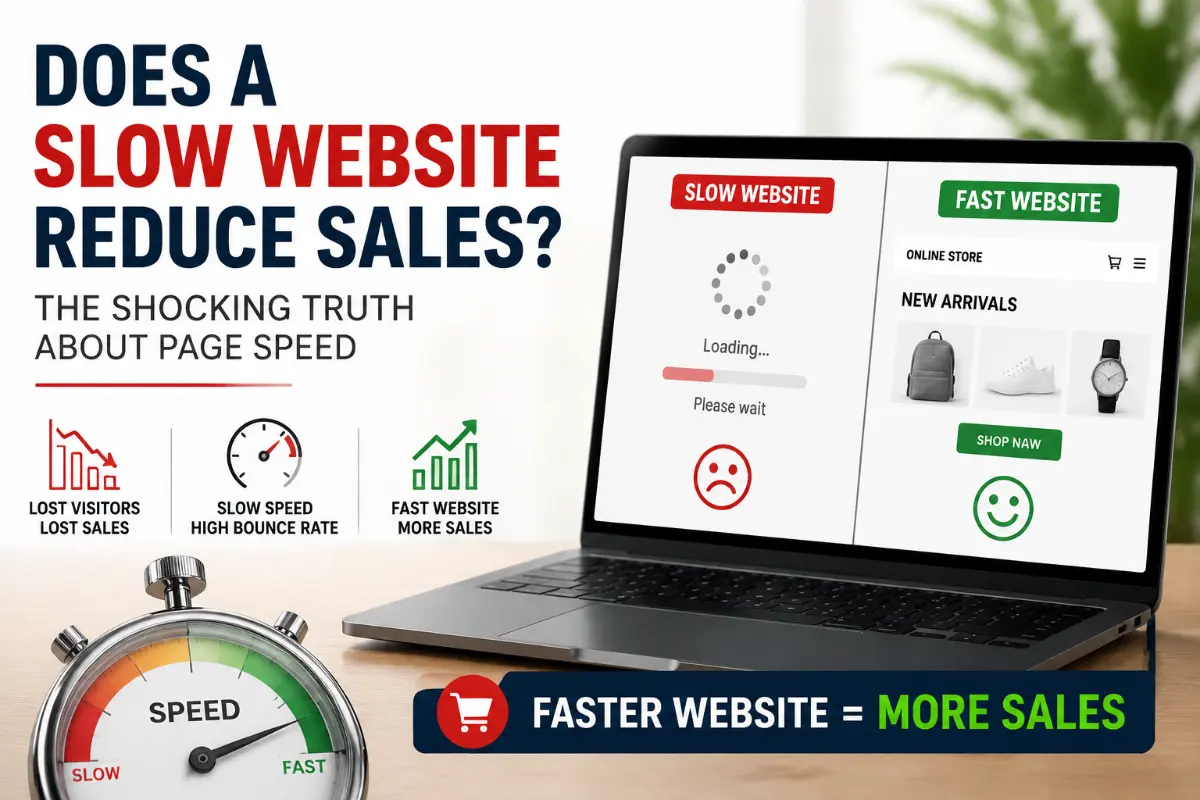
Does a Slow Website Reduce Sales? The Shocking Truth About Page Speed
Introduction: Your Website Speed Could Be Costing You Customers
Imagine walking into a shop, but the door takes 10 seconds to open. Then the lights take another few seconds to turn on. The products slowly appear one by one, and every action feels delayed.
Most customers would simply leave.
A slow website creates the same experience online. Visitors expect websites to load quickly, and when pages are slow, many people abandon the site before they ever see your products, services, or offers.
The shocking truth is that website speed directly affects sales, conversions, customer trust, and even your search engine rankings. A slow website is not just a technical problem — it is a business problem.
In this article, we will explain how page speed impacts your revenue, why websites become slow, and what you can do to improve loading times.
How Does Website Speed Affect Sales?
Website visitors have very little patience. Online users expect instant results, and every extra second of loading time increases the chance that they leave.
Studies have consistently shown that slow-loading websites experience:
- Higher bounce rates
- Fewer product views
- Lower conversion rates
- Reduced customer trust
- Fewer completed purchases
For an eCommerce website, even a small delay can mean losing potential customers.
For example:
A customer searches for a product, clicks your website, and waits several seconds for the page to load. During that time, they may think:
- “Is this website reliable?”
- “Maybe this company is not active anymore.”
- “I’ll check another website.”
A competitor with a faster website can win that customer instantly.
The Connection Between Page Speed and Conversion Rates
A conversion happens when a visitor completes a valuable action, such as:
- Buying a product
- Filling out a contact form
- Signing up for a newsletter
- Booking a service
- Requesting a quote
Your website can have excellent products and persuasive marketing, but if visitors leave before interacting with your page, none of that matters.
Slow Pages Create Buying Friction
Every delay creates friction in the buying process.
A fast website creates a smooth experience:
Visitor → Product Page → Add to Cart → Checkout → Purchase
A slow website creates obstacles:
Visitor → Waiting → Frustration → Exit → Lost Sale
The difference may only be a few seconds, but those seconds can significantly impact revenue.

How Much Does a Few Seconds Really Matter?
Many website owners underestimate the impact of speed because they personally know their business and are willing to wait.
Customers are different.
A visitor who does not know your brand has no reason to be patient.
Research from Google has shown that as page load time increases, the probability of users leaving increases significantly.
For example:
- A website loading in 1–2 seconds feels instant.
- A website loading in 3–5 seconds starts feeling slow.
- A website taking 6+ seconds risks losing a large percentage of visitors.
For an online store receiving thousands of visitors each month, a small decrease in conversions can represent hundreds or thousands of pounds in lost sales.
Slow Websites Damage Customer Trust
Speed is not only about convenience — it affects credibility.
People naturally associate website performance with professionalism.
A slow website can make visitors question:
- Is this business trustworthy?
- Is payment secure?
- Will my order be processed properly?
- Will customer support be reliable?
This is especially important for:
- Online shops
- Financial websites
- Professional services
- Booking websites
- Local businesses
A fast website gives customers confidence before they even make a purchase.
Does Website Speed Affect SEO Rankings?
Yes, website speed is an important SEO factor.
Search engines such as Google want to provide users with the best possible experience. A slow website can negatively affect your visibility because speed is part of Google's page experience signals.
A slow website may lead to:
- Lower search rankings
- Reduced organic traffic
- Fewer visitors discovering your business
This creates a damaging cycle:
Slow Website → Poor User Experience → Lower Rankings → Less Traffic → Fewer Sales
Improving page speed helps both users and search engines understand that your website provides a quality experience.
Why Are Websites Slow?
There are many reasons a website becomes slow. Some common causes include:
1. Large Images
Images are one of the biggest causes of slow websites.
Many businesses upload:
- High-resolution photographs
- Uncompressed product images
- Large banners
- Background videos
A single large image can add several seconds to loading time.
Solution:
- Compress images
- Use modern formats like WebP
- Resize images before uploading
- Avoid unnecessary graphics
2. Too Many Plugins
This is especially common with WordPress websites.
Plugins add useful features, but too many plugins can slow down your website.
Examples:
- Multiple security plugins
- Page builders
- Unnecessary tracking tools
- Duplicate functionality
Each plugin can add extra code that the browser must load.
Solution:
- Remove unused plugins Keep important plugins updated Replace multiple plugins with one efficient solution 3. Poor Website Hosting
- Remove unused plugins
- Keep important plugins updated
- Replace multiple plugins with one efficient solution
3. Poor Website Hosting
Your hosting provider plays a major role in website speed.
Cheap hosting plans often place hundreds of websites on the same server, reducing performance.
Signs of poor hosting include:
- Slow loading even with optimization
- Slow WordPress dashboard
- Slow checkout process
- Frequent downtime
Investing in better hosting can dramatically improve performance.
4. Too Much Website Code
Modern websites often include:
- JavaScript files
- CSS files
- Tracking scripts
- Animations
- Marketing tools
Too much unnecessary code increases loading times.
Developers can improve speed by:
- Minifying files
- Removing unused code
- Loading scripts efficiently
- Using caching

How to Check Your Website Speed
Before fixing problems, you need to measure performance.
Useful website speed testing tools include:
Google PageSpeed Insights
This free tool analyses your website and provides recommendations.
It checks:
- Loading speed
- Mobile performance
- Core Web Vitals
- Technical problems
GTmetrix
GTmetrix provides detailed information about:
- Page size
- Server response time
- Images
- Scripts
- Performance issues
Pingdom Website Speed Test
Another simple tool for checking loading times and identifying problems.
How to Make Your Website Faster
Improving website speed usually requires several small improvements rather than one single fix.
Here are the most effective methods:
Optimize Images
- Compress large images
- Convert images to WebP format
- Use correct dimensions
Enable Browser Caching
Caching allows returning visitors to load your website faster because some files are stored locally.
Use a Content Delivery Network (CDN)
A CDN stores copies of your website files across multiple locations worldwide, allowing visitors to load content from a nearby server.
Popular CDN services include:
- Cloudflare
- Fastly
- Amazon CloudFront
Optimize Your Database
For WordPress websites, regularly clean:
- Old revisions
- Spam comments
- Temporary files
- Unused data
Choose Quality Hosting
A faster server improves:
- Page loading
- Checkout speed
- Website reliability
Mobile Website Speed Is Even More Important
More than half of internet traffic comes from mobile devices.
Mobile users often experience:
- Slower connections
- Smaller screens
- Less patience
A website that works perfectly on desktop may still perform badly on mobile.
Businesses should always test:
- Mobile loading speed
- Mobile navigation
- Checkout experience
- Image performance
A slow mobile website can cost you customers who never return.
The Real Cost of Ignoring Website Speed
Many businesses focus heavily on:
- Advertising
- Social media
- SEO campaigns
- New products
But they ignore the website experience.
Imagine spending £1,000 on advertising and sending visitors to a slow website where many people leave immediately.
The advertising worked — the website failed.
Improving page speed helps you get more value from every visitor you already have.
Final Thoughts: Website Speed Is a Sales Tool
A slow website is more than an inconvenience. It can reduce sales, damage customer trust, hurt SEO rankings, and waste your marketing budget.
Customers expect fast experiences. If your website does not deliver, they will often choose a competitor that does.
The good news is that website speed problems can usually be fixed through:
- Image optimization
- Better hosting
- Cleaner code
- Caching
- Plugin management
- Technical improvements
In today's competitive online world, speed is not just a technical feature — it is a competitive advantage that directly influences your revenue.
A faster website creates happier visitors, better rankings, and more sales.